Port Washington Watershed Biodiversity Coalition



Our Vision
A resilient Port Washington Watershed where biodiversity thrives, and science, education, and community stewardship work together to sustain long-term ecological health and human well-being.
Our Mission
To conserve biodiversity across the Port Washington Watershed by protecting, restoring, connecting, and enhancing habitats; advancing science-based conservation through biodiversity assessments and natural resource inventories; and translating research into action through education, stewardship, and citizen science—guided by PWWBC’s Science Advisory Committee.
By the Numbers
1,000+ acres of diverse natural habitat stewarded
2,500 + wildlife species documented and protected
Over one mile of natural coastline with ongoing and future resilience planning
Ten local community-based organizations working together
Three watersheds united: Manhasset Bay, Hempstead Harbor, and the Long Island Sound
One growing movement for people and nature
Our Work
Protecting and connecting habitats by promoting ecologically responsible land-use practices and setting aside land to remain free from development and human disturbance.
Restoring degraded habitats through targeted invasive species management, reducing nutrient loading and pollution, restoring natural hydrology, and, where appropriate, natural attenuation.
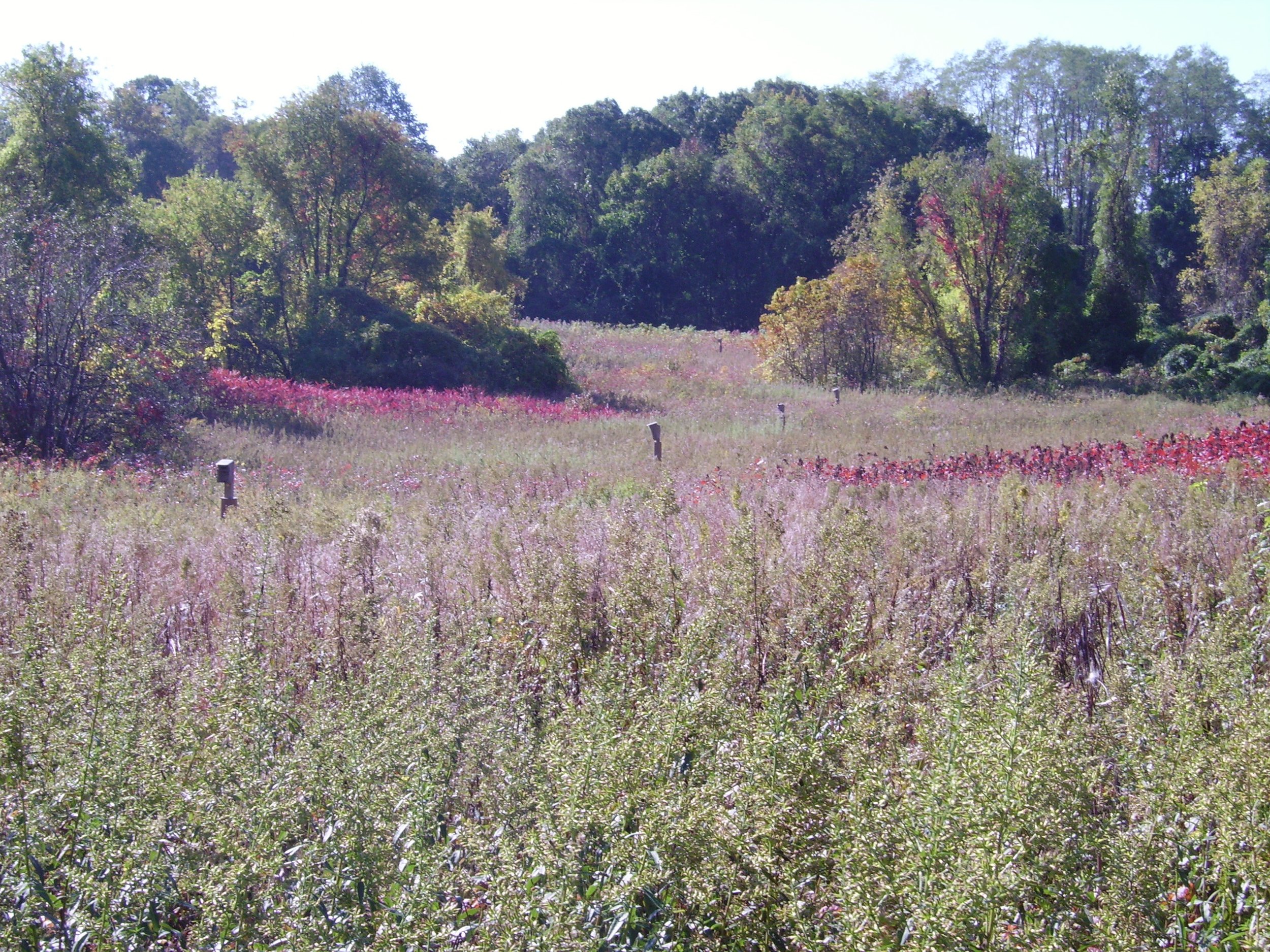
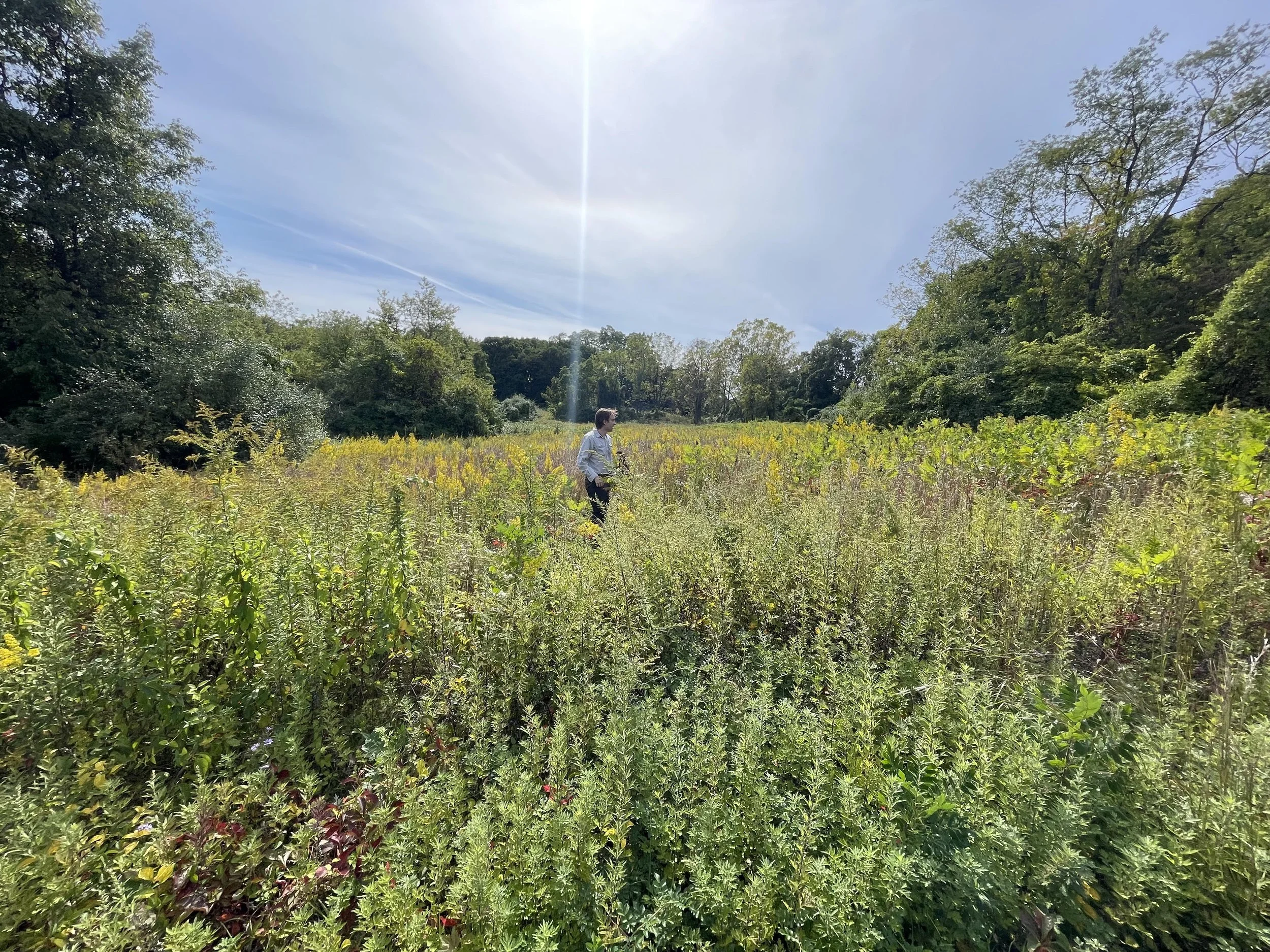
Maintaining meadows through prescribed mowing to sustain early-successional biodiversity.
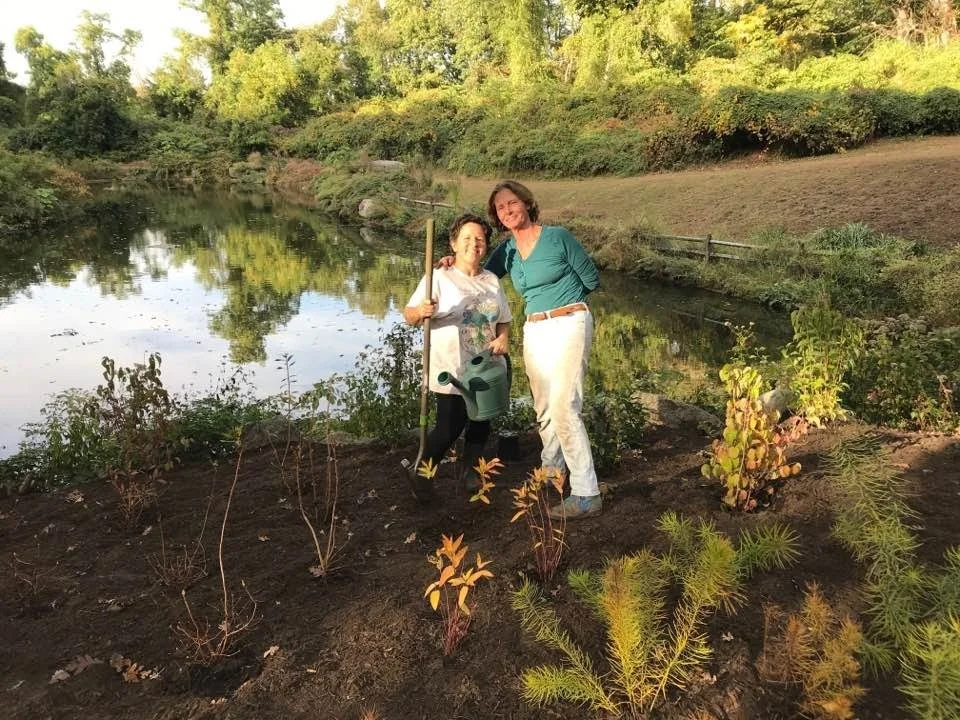
Enhancing biodiversity and ecological function in ponds, waterbodies, riparian corridors, and wetlands by establishing native emergent and shoreline vegetation and restoring adjacent habitat buffers.
Advancing coastal habitat resilience through living shoreline approaches—including oyster gardening and other nature-based solutions—that reduce erosion, enhance intertidal and nearshore habitats, improve water quality, and support natural coastal processes.
Creating new habitats adjacent to existing ones to strengthen ecological connectivity and increase shared habitat value.
Coordinating science-based biodiversity conservation initiatives across local golf courses within the Port Washington Watershed.
Collecting locally sourced native plant seeds for propagation and distribution across Long Island.
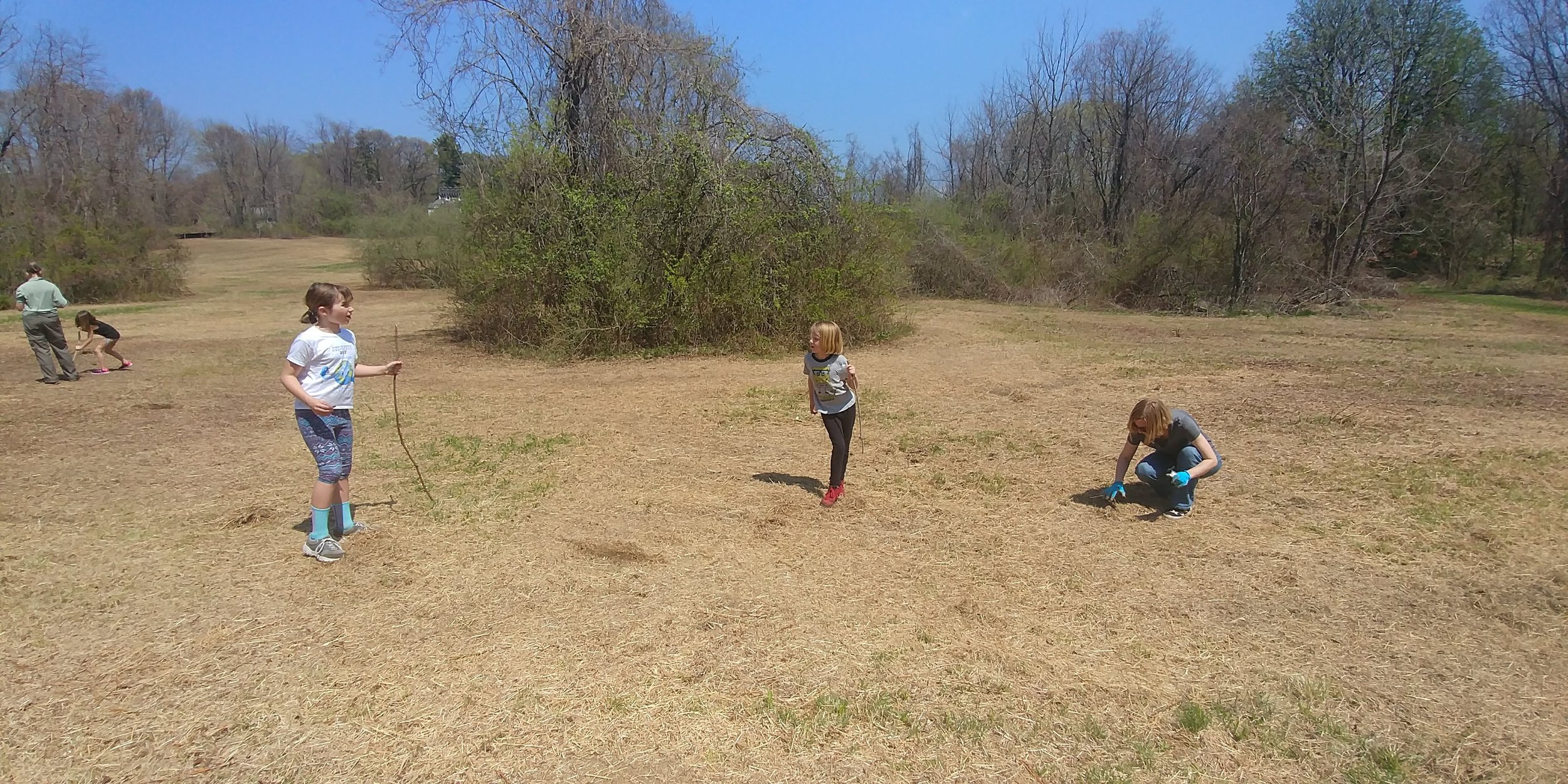
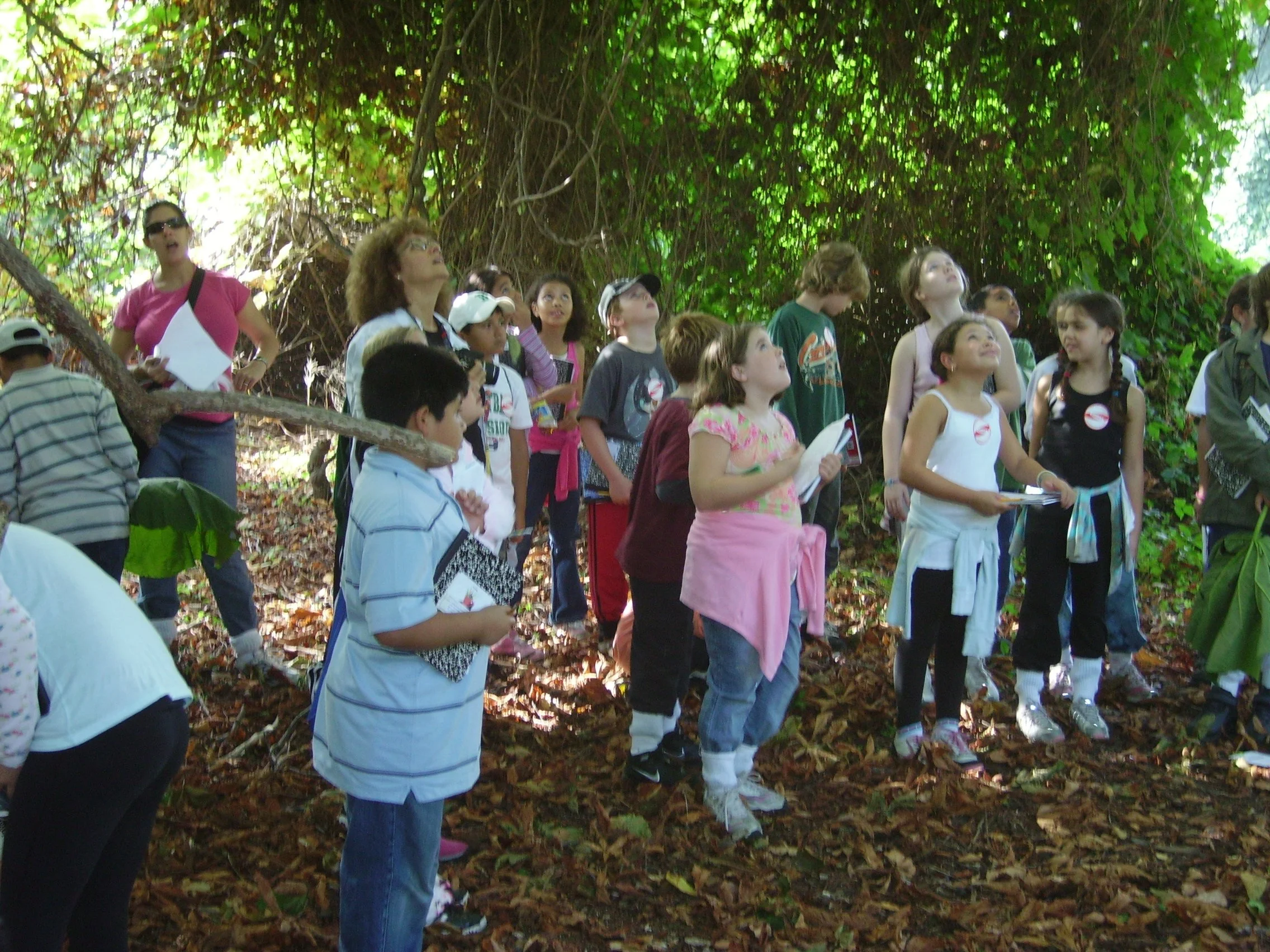
Supporting youth stewardship by enabling young people to take responsibility for local conservation projects and environmental practices
Together, we are shaping a healthier, more resilient future for the Port Washington Watershed.
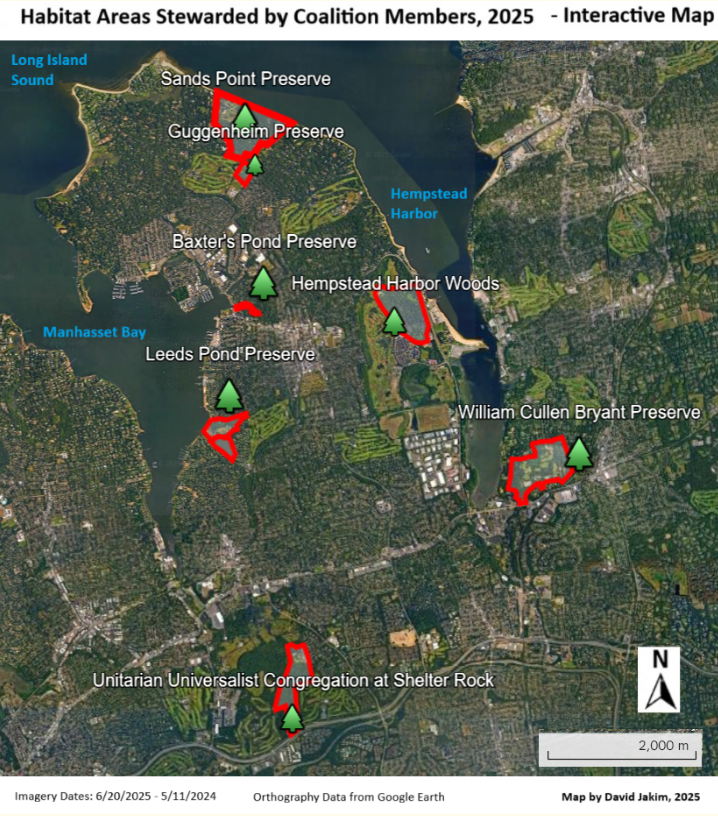
An interactive, zoomable map showing select Coalition member sites.

Habitat Map of the Port Washington Watershed (including portions of Roslyn and Manhasset).
Prepared by David Jakim (2013) using remote sensing and field verification. Mapping is ongoing, with additional areas of the watershed to be mapped as work expands. Click the map to view a zoomable, high-resolution version.
What is Biodiversity and Why Is It Important?
Biodiversity, or biological diversity, is the variety of life on Earth. It encompasses genetic diversity, species diversity, and ecosystem diversity—and it is being lost at an alarming rate both regionally and worldwide. The Port Washington Watershed’s diversity of habitat types (see habitat map above) supports a wide range of ecological communities and associated species, including many that are federally and New York State–listed as rare, threatened, or endangered. To date, well over 2,500 species of plants, fungi, and animals have been documented within the watershed, with many additional species likely present but not yet recorded.
Biodiversity provides essential ecosystem services. It supports agricultural diversity, contributes to the discovery and development of medicines, and helps regulate disease dynamics by influencing the abundance and distribution of disease vectors, including those associated with Lyme disease. Biodiversity also plays a critical role in improving water quality, mitigating pollution, building and maintaining healthy soils, and sequestering carbon.
Biodiversity further enhances the resilience of coastal human and natural communities that are increasingly vulnerable to climate change and environmental uncertainty. Diverse, well-functioning ecosystems help buffer the impacts of sea-level rise, severe storms, intense rainfall events, flooding, and droughts by stabilizing soils and shorelines, moderating hydrology, and supporting adaptive ecological responses.
In addition to these ecological benefits, biodiversity enriches the scenic character and aesthetic quality of the watershed, expands opportunities for meaningful experiences in nature, and supports environmental education and community well-being. We affirm that each species within the watershed has intrinsic value, and that biological diversity is inherently meaningful, valuable, and worthy of care. This connection between biodiversity and people is especially evident in community-driven initiatives such as ReWild Long Island and in accessible natural areas—including Baxter’s Pond Preserve, Manorhaven Preserve, and the Guggenheim Preserve—which, despite their modest size, place nature directly within daily reach of residents.
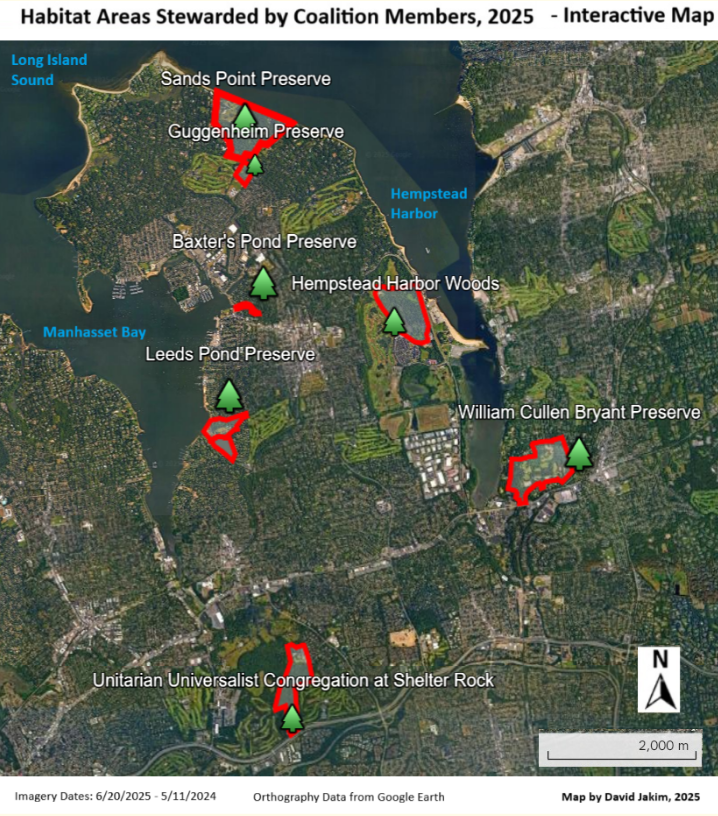
An interactive, zoomable map showing select Coalition member sites overlaid on aerial imagery.
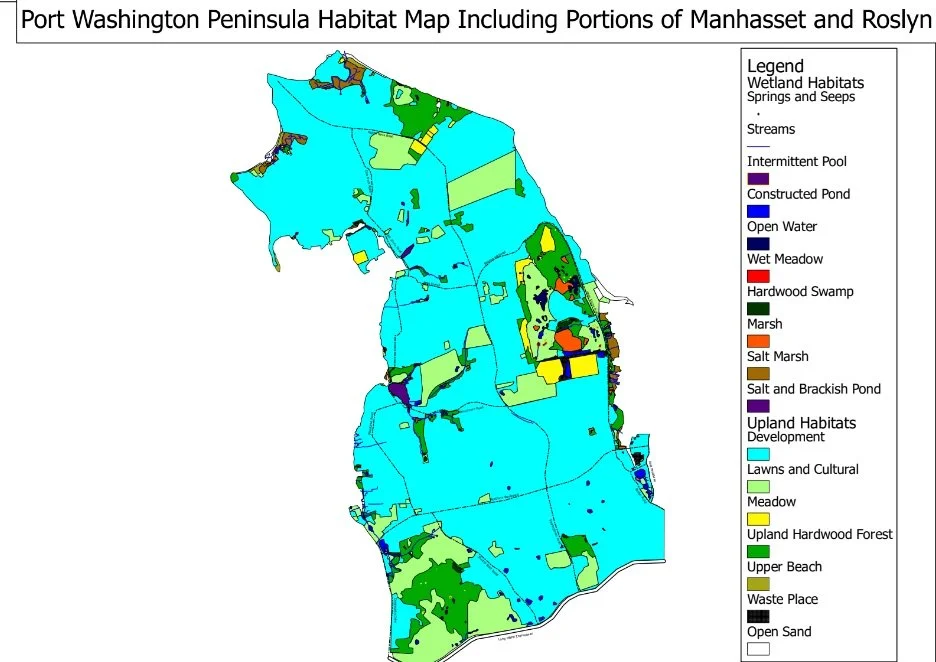
Habitat Map of the Port Washington Watershed (including portions of Roslyn and Manhasset).
Prepared by David Jakim (2013) using remote sensing and field verification. Mapping is ongoing, with additional areas of the watershed to be mapped as work expands. Click the map to view a zoomable, high-resolution version.
Our Vision
A resilient Port Washington Watershed where biodiversity thrives, and science, education, and community stewardship work together to sustain long-term ecological health and human well-being.
Our Mission
To conserve biodiversity across the Port Washington Watershed by protecting, restoring, connecting, and enhancing habitats; advancing science-based conservation through biodiversity assessments and natural resource inventories; and translating research into action through education, stewardship, and citizen science—guided by PWWBC’s Science Advisory Committee.
By the Numbers
1,000+ acres of diverse natural habitat stewarded
2,500 + wildlife species documented and protected
Over one mile of natural coastline with ongoing and future resilience planning
Ten local community-based organizations working together
Three watersheds united: Manhasset Bay, Hempstead Harbor, and the Long Island Sound
One growing movement for people and nature
Our Work
Protecting and connecting habitats by promoting ecologically responsible land-use practices and setting aside land to remain free from development and human disturbance.
Restoring degraded habitats through targeted invasive species management, reducing nutrient loading and pollution, restoring natural hydrology, and, where appropriate, natural attenuation.
Maintaining meadows through prescribed mowing to sustain early-successional biodiversity.
Enhancing biodiversity and ecological function in ponds, waterbodies, riparian corridors, and wetlands by establishing native emergent and shoreline vegetation and restoring adjacent habitat buffers.
Advancing coastal habitat resilience through living shoreline approaches—including oyster gardening and other nature-based solutions—that reduce erosion, enhance intertidal and nearshore habitats, improve water quality, and support natural coastal processes.
Creating new habitats adjacent to existing ones to strengthen ecological connectivity and increase shared habitat value.
Coordinating science-based biodiversity conservation initiatives across local golf courses within the Port Washington Watershed.
Collecting locally sourced native plant seeds for propagation and distribution across Long Island.
Supporting youth stewardship by enabling young people to take responsibility for local conservation projects and environmental practices
Together, we are shaping a healthier, more resilient future for the Port Washington Watershed.
What is Biodiversity and Why Is It Important?
Biodiversity, or biological diversity, is the variety of life on Earth. It encompasses genetic diversity, species diversity, and ecosystem diversity—and it is being lost at an alarming rate both regionally and worldwide. The Port Washington Watershed’s diversity of habitat types (see habitat map above) supports a wide range of ecological communities and associated species, including many that are federally and New York State–listed as rare, threatened, or endangered. To date, well over 2,500 species of plants, fungi, and animals have been documented within the watershed, with many additional species likely present but not yet recorded.
Biodiversity provides essential ecosystem services. It supports agricultural diversity, contributes to the discovery and development of medicines, and helps regulate disease dynamics by influencing the abundance and distribution of disease vectors, including those associated with Lyme disease. Biodiversity also plays a critical role in improving water quality, mitigating pollution, building and maintaining healthy soils, and sequestering carbon.
Biodiversity further enhances the resilience of coastal human and natural communities that are increasingly vulnerable to climate change and environmental uncertainty. Diverse, well-functioning ecosystems help buffer the impacts of sea-level rise, severe storms, intense rainfall events, flooding, and droughts by stabilizing soils and shorelines, moderating hydrology, and supporting adaptive ecological responses.
In addition to these ecological benefits, biodiversity enriches the scenic character and aesthetic quality of the watershed, expands opportunities for meaningful experiences in nature, and supports environmental education and community well-being. We affirm that each species within the watershed has intrinsic value, and that biological diversity is inherently meaningful, valuable, and worthy of care. This connection between biodiversity and people is especially evident in community-driven initiatives such as ReWild Long Island and in accessible natural areas—including Baxter’s Pond Preserve, Manorhaven Preserve, and the Guggenheim Preserve—which, despite their modest size, place nature directly within daily reach of residents.
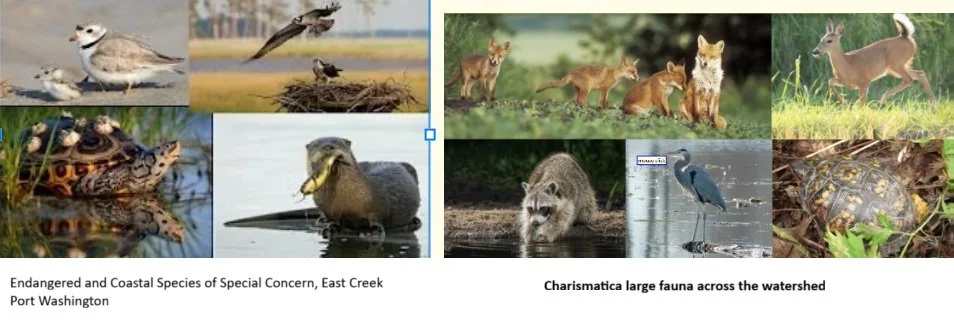
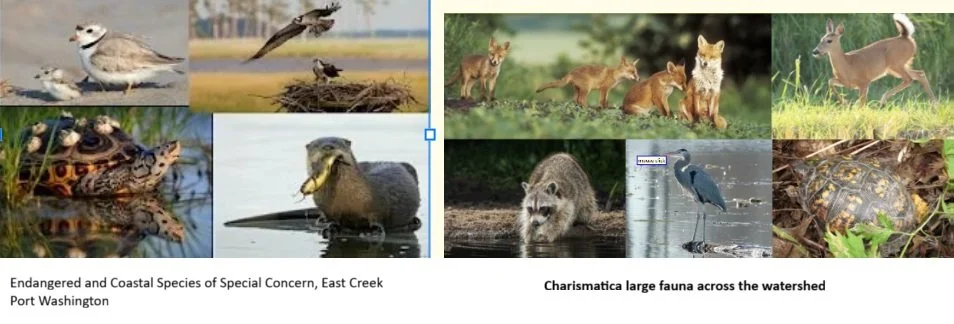
Representative wildlife of the Port Washington Watershed, including species of conservation concern, flagship species, and commonly encountered native fauna.
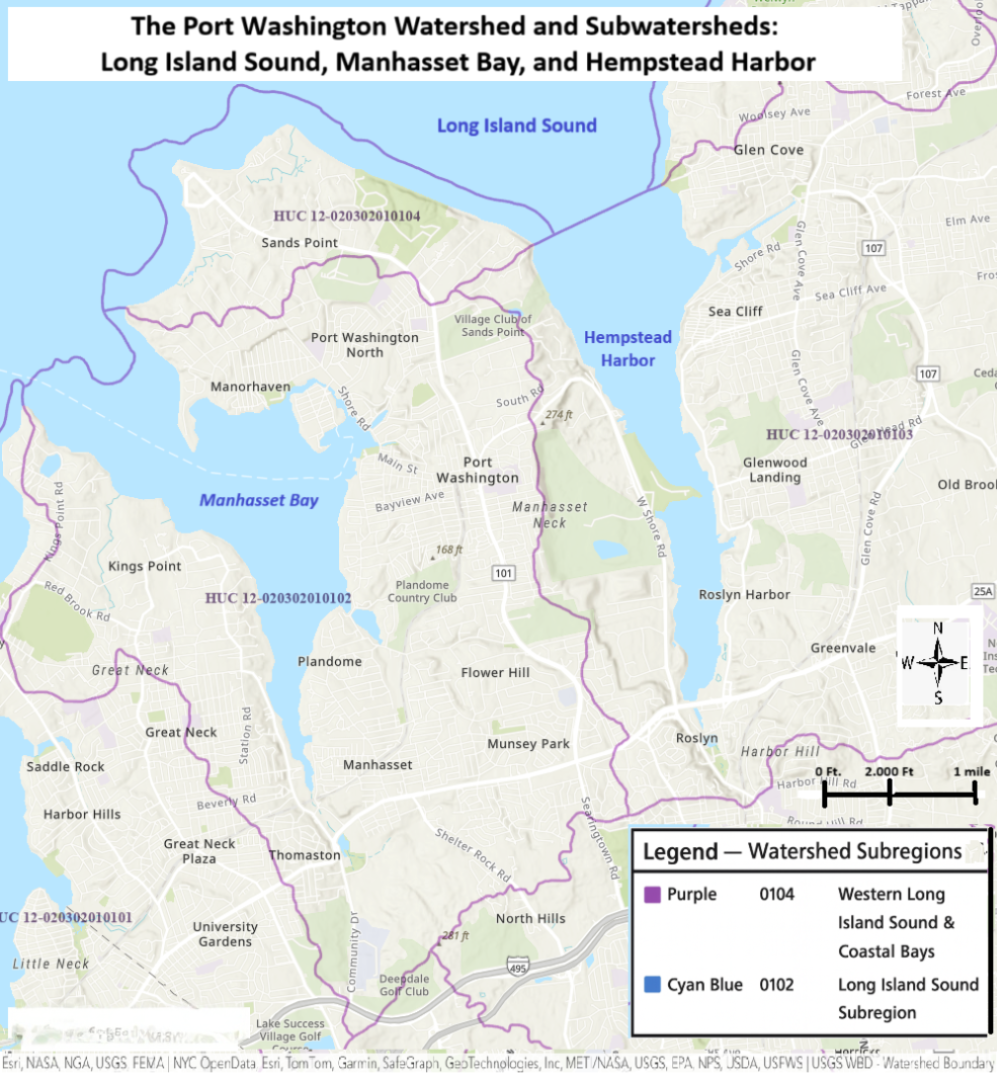
A Watershed Approach to Collaboration
The Port Washington watershed provides a natural boundary for our coalition’s stewardship areas to work together—one defined by the land, people, and water. A watershed is an area of land where all the water—rain, snow, groundwater, and streams—flows down-gradient into the same place, such as the subwatersheds of Manhasset Bay and Hempstead Harbor, which in turn drain into the Long Island Sound. Land-use changes that occur within a watershed affect the quality, quantity, and movement of water through that system. Surface waters and groundwater connect people, wildlife corridors, neighborhoods, parks, preserves, golf courses, roads, coastlines, and marine habitats into interconnected ecosystems. Healthy watersheds play a critical role in protecting water quality, reducing flooding, recharging groundwater, and supporting biodiversity. By working as a Watershed Coalition, we help ensure that land-use decisions are informed by how water, habitats, and communities are connected.
Maintaining the connectivity of freshwater, terrestrial, and marine environments is of critical importance to biogeochemical cycling and the overall functioning of ecosystems. Biodiversity enhances the ability of ecosystems to slow water runoff and flooding, filter pollutants, stabilize soils, and serve as habitats and nurseries for aquatic and marine life. When these systems are degraded or disconnected, water quality declines, flooding risks increase, and both human and ecological communities become more vulnerable.
Coastal disaster resilience is one of the most pressing issues in the Port Washington watershed. With up to 2.5 feet of sea-level rise projected by 2050 and as much as nine feet by 2100, our communities are at risk of losing their connection to the coast and to the Long Island Sound. Coastal coalition members, including Leeds Pond Preserve, Manorhaven Preserve, and Sands Point Preserve, and the organizations that steward these habitats, recognize the urgent need for coastal planning and action. The Coalition is currently in the planning phase of collaboration to protect the biodiversity and ecological functioning of our watershed and coastlines.
To help tackle these problems, the Coalition is coordinating with the New York State Department of Environmental Conservation (NYS DEC) to develop a pilot project using locally sourced kelp as a soil amendment to fertilize golf courses, thereby reducing nutrient loading from golf courses into Manhasset Bay. In addition, the Coalition is working with Transition Town Port Washington and other community groups to establish oyster reefs around Manhasset Bay with the Billion Oyster Project.

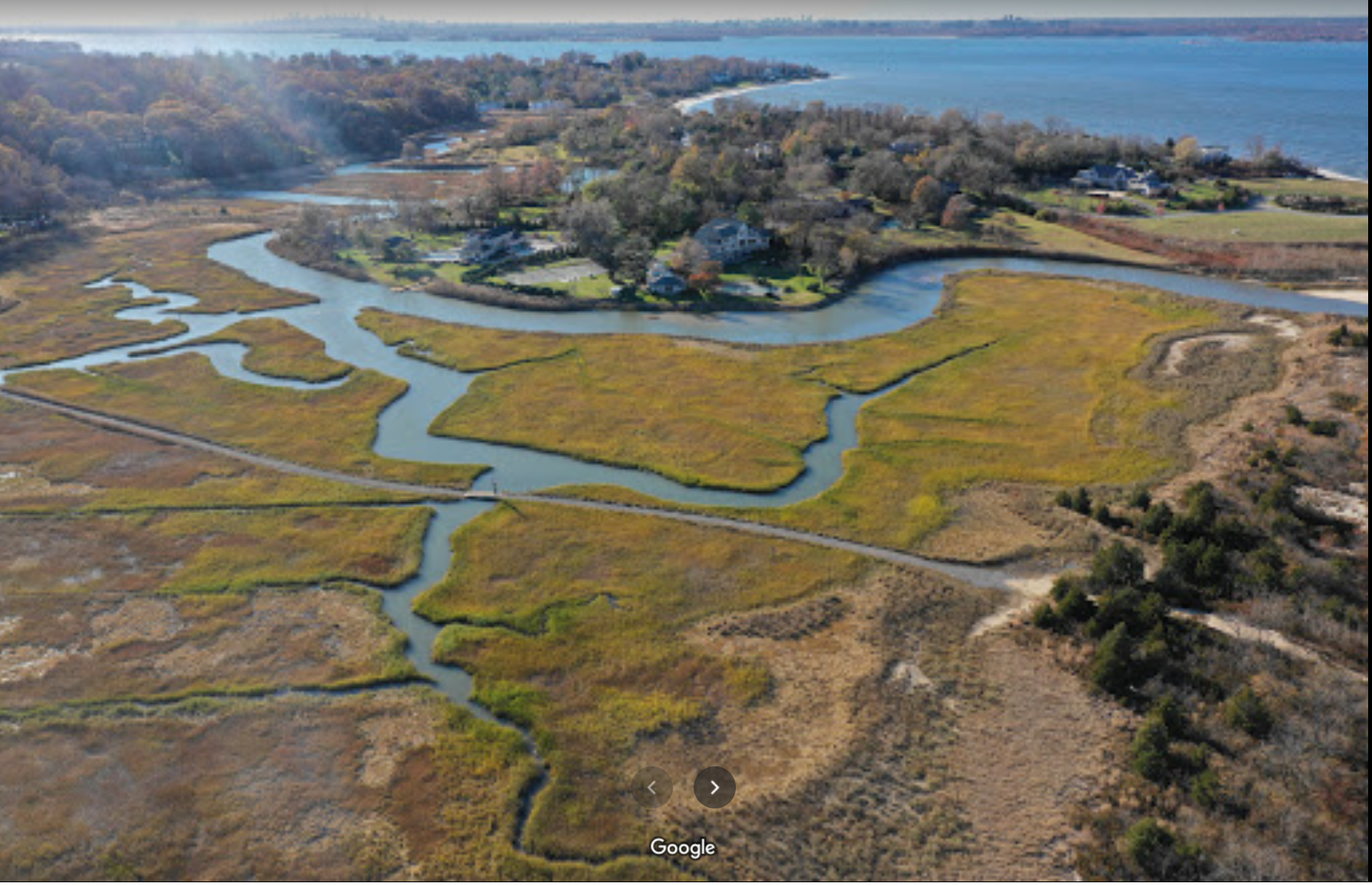
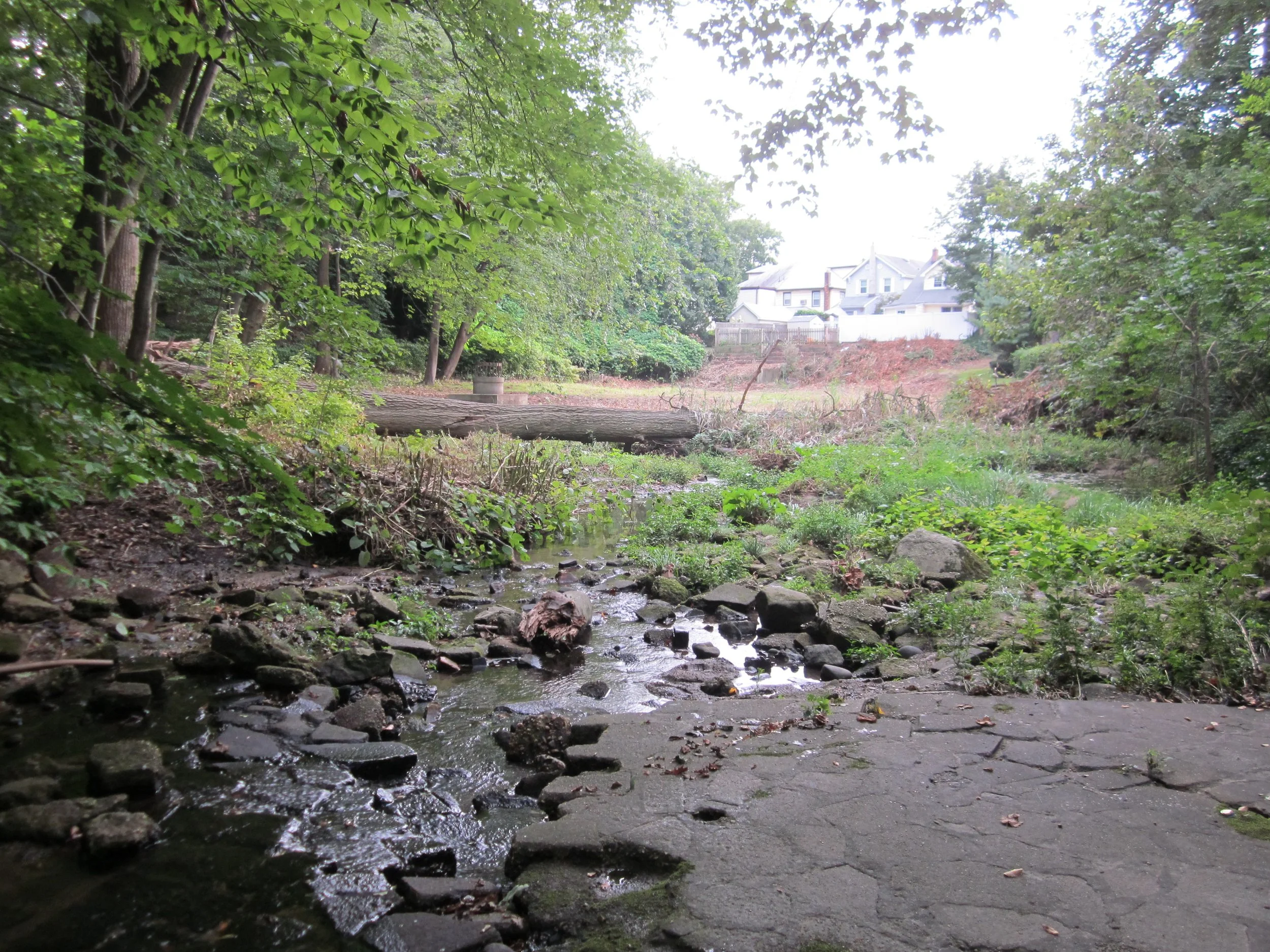
East Creek, Overlooking Prospect Point, flowing into the Long Island Sound, Port Washington
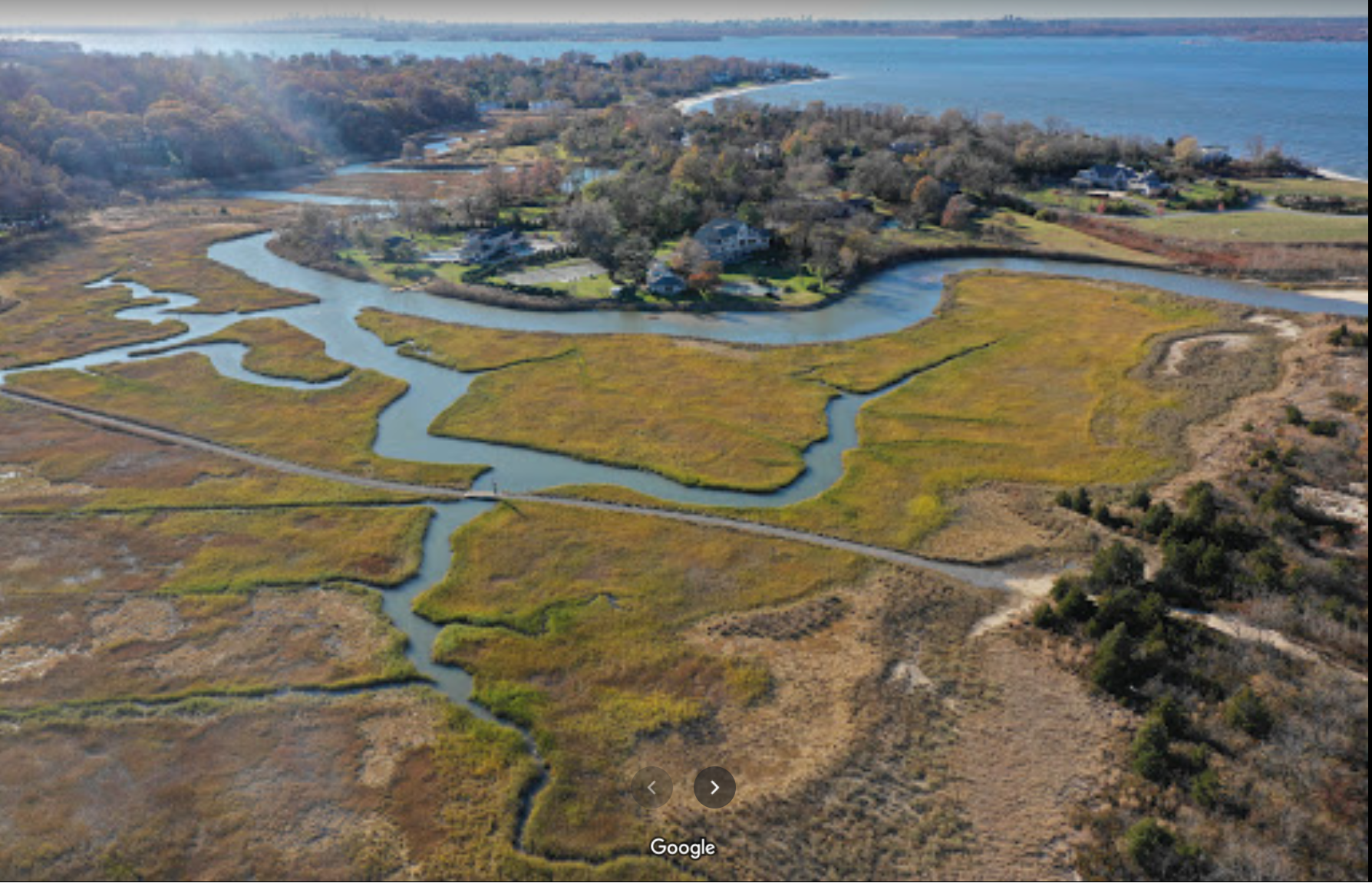
Salt marsh restoration at Mayor Newberger’s Cove by Bar Beach, Hempstead Harbor
The Flagship and Umbrella Species that Connects Us: The Monarch Butterfly
The Monarch is an ideal species for environmental education and engagement with the living world—inviting curiosity, wonder, and mystery. The Port Washington Monarch Alliance was founded in 2017 as ReWild Long Island’s community outreach and education wing. The Monarch butterfly connects us all; it traverses and cross-pollinates all eight of the Coalition’s stewardship sites, as well as other natural habitats including meadows, forest edges, roadsides, and home gardens.
The mystery of Monarch migration from Canada to Mexico each year—four generations removed—returning to the very same and remote oyamel fir forests where their great-great-grandparents departed nine months earlier continues to confound scientists and laypersons alike. The Monarch remains one of nature’s most powerful reminders of both the fragility of life and how little we truly understand about the living world.
Monarch butterflies are threatened by climate change and the widespread loss of habitat, especially in the Midwest due to modern agricultural land-use practices. Monarch populations have declined by approximately 80% from their peak in 1996. Biologists have determined that there is a strong possibility that this species, given its tumultuous population crashes and rebounds, could become extinct in the coming decades unless action is taken. We can help reverse this trend by planting milkweed and establishing Monarch Waystations. Monarch Waystations are sites containing nectar-producing plants and, crucially, milkweed (Asclepias spp.), which is the only genus of host plants on which Monarchs will lay their eggs and that supports the Monarch’s complete life cycle from egg to caterpillar to chrysalis to adult.
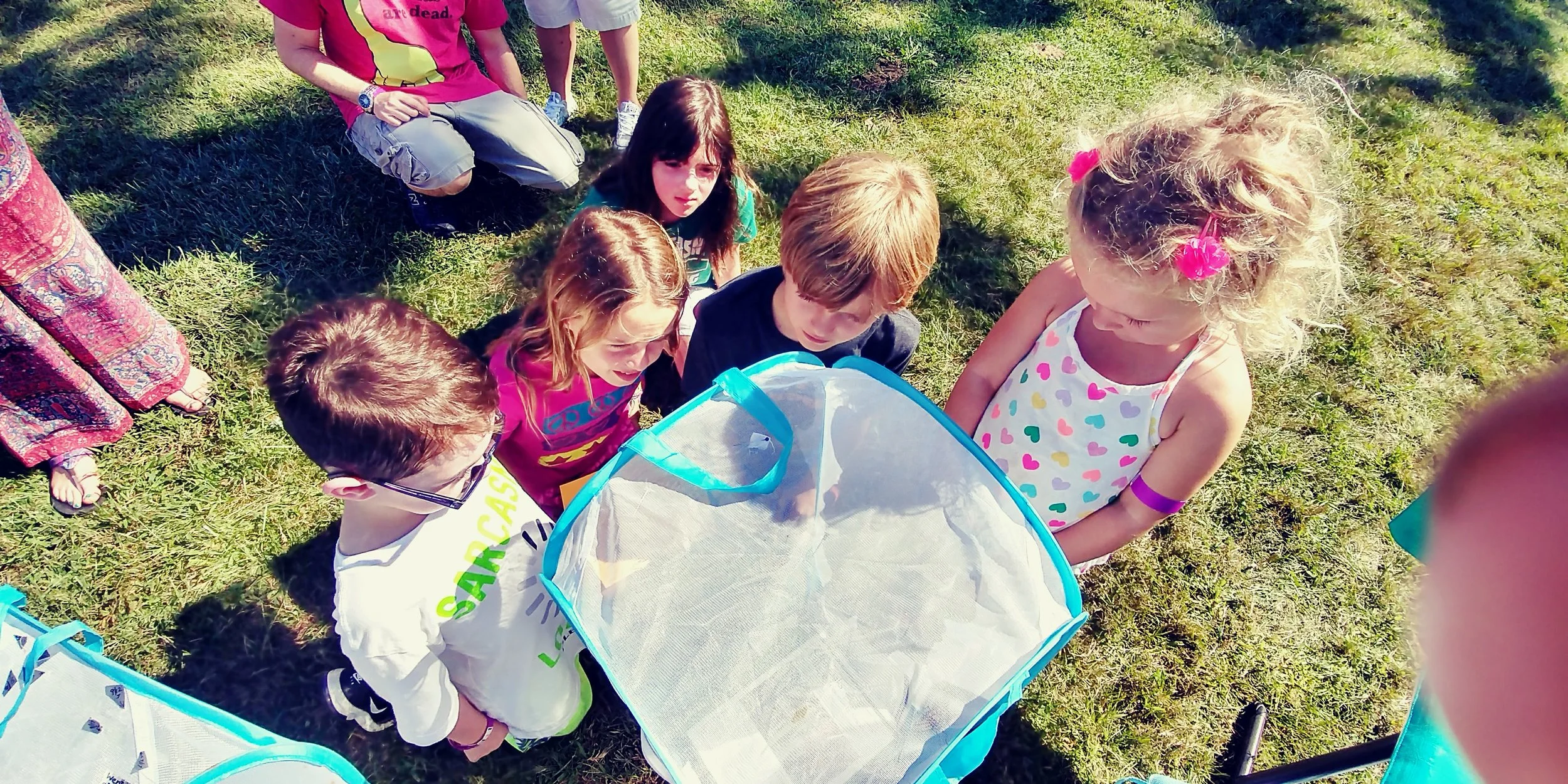
Coalition members and the Port Washington Monarch Alliance plant milkweed seeds and raise Monarchs from eggs to adulthood to share at public events, giving children and adults the chance to witness the opening of chrysalises and the spreading of wings for the first time. Children make a wish for the released Monarch, and a wish for themselves. Tanya Clusener, after a Monarch butterfly workshop by ReWild Port Washington in 2017, was inspired and has meticulously raised and released more than 9,500 Monarchs over the last several years. In October 2025, Sands Point Preserve and youth working with the Coalition created a Monarch Waystation to assist this imperiled species.
An umbrella species, creating habitat for Monarch butterflies also supports a great diversity of other wildlife. Milkweed plants are the documented larval host plants for six additional species of butterflies and moths, fourteen other dependent invertebrate herbivores, and eighteen predatory invertebrate species. In addition, fifteen birds, including declining species, have been reported to use milkweed plants: eleven species that hunt for and predate invertebrates attracted to milkweed, and four species that use milkweed fibers for their nests. Other local umbrella species include the Eastern box turtle, mole salamanders, the wood frog, diamondback terrapin, the North American river otter, the Eastern coyote, the Great Horned Owl, and the Osprey.
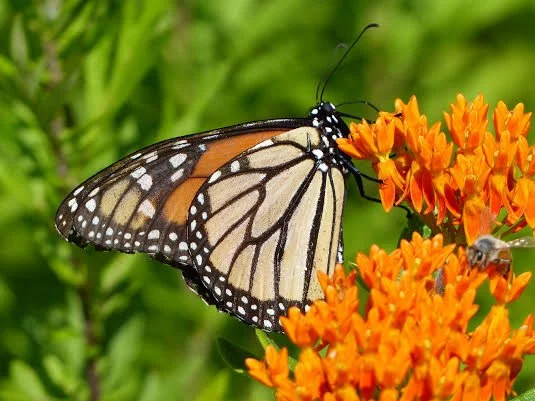
Monarch butterfly and bee nectaring on butterflyweed (Asclepias tuberosa), a type milkweed
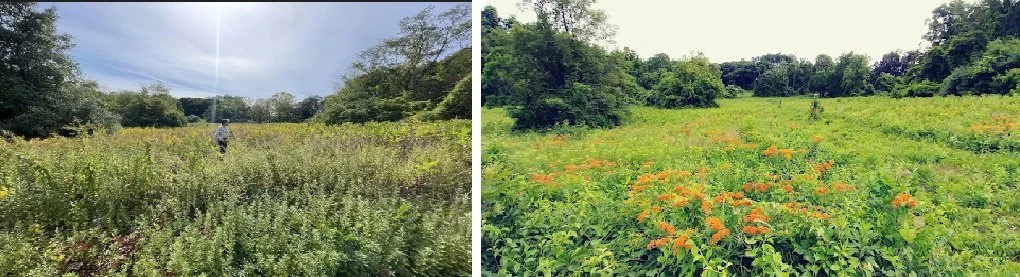
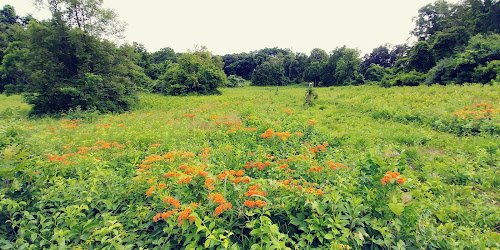
Collecting butterflyweed seeds (Asclepias tuberosa) at the Guggenheim Preserve for propagation to spread across Long Island with the Long Island Native Plant Initiative (left), 2025. Orange butterflyweed in full August bloom (right), 2019. Guggenheim Preserve, Port Washington.
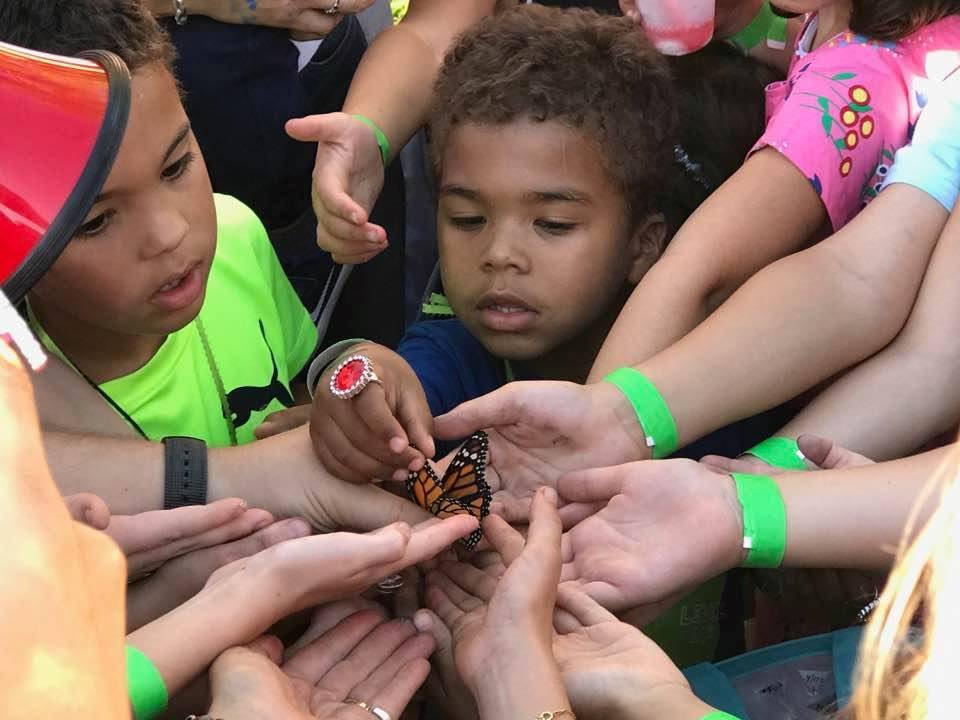
Ceremonial Monarch butterfly release at Leeds Pond Preserve, 2019Recent Panel Discussions and Presentations
A Port Washington Biodiversity Coalition Panel Discussion Moderated by Transition Town Port Washington 501(c)(3)
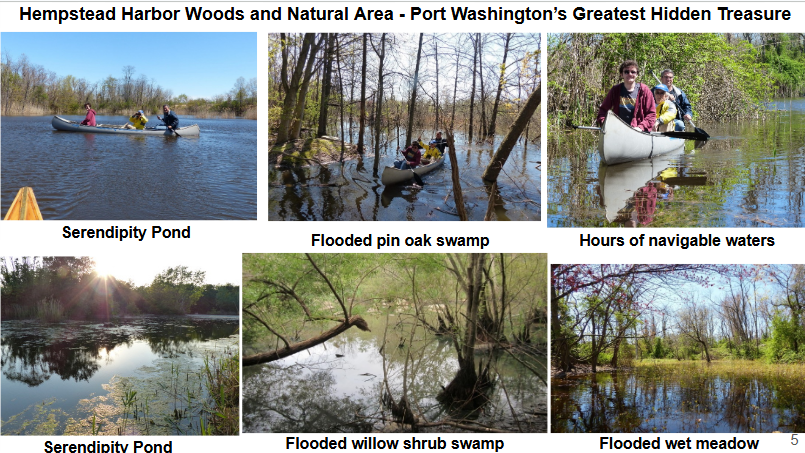
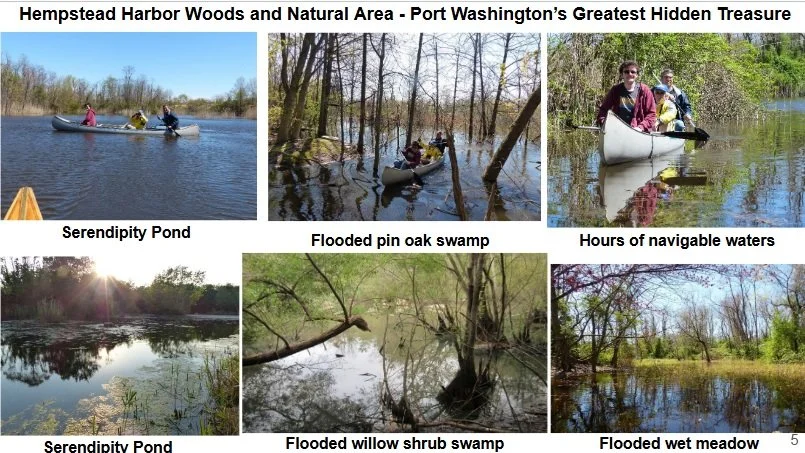
Hempstead Harbor Woods - Port Washington’s Least Known Treasure, by David Jakim

Dream it
Dream it
Join the Coalition’s Mailing List
Stay informed about local conservation efforts, volunteer opportunities, nature walks, habitat restoration, and community science programs.